

For 100 years, Black History Month has helped shape our understanding of identity, justice, and belonging in America.

What began as Negro History Week in 1926, founded by historian and educator Carter G. Woodson, grew into a national movement to preserve truth, celebrate Black excellence, and ensure that the stories of Black Americans were not erased. Today, Black History Month stands as a powerful reminder that history does not simply belong in textbooks — it lives in our communities, classrooms, and children.
This year’s theme, “A Century of Black History Commemorations,” invites us to reflect not only on the past, but also on our responsibility to protect the future.
Photo: clockwise from top left: Frederick Douglass, Abolitionist (1818–1895), Sojourner Truth, Activist (1797–1883), Martin Luther King Jr., Activist (1929–1968), George Washington Carver, Scientist (1864–1943) . This media file is in the public domain in the United States. This applies to U.S. works where the copyright has expired, often because its first publication occurred prior to January 1, 1931.
Why Black History Month Still Matters
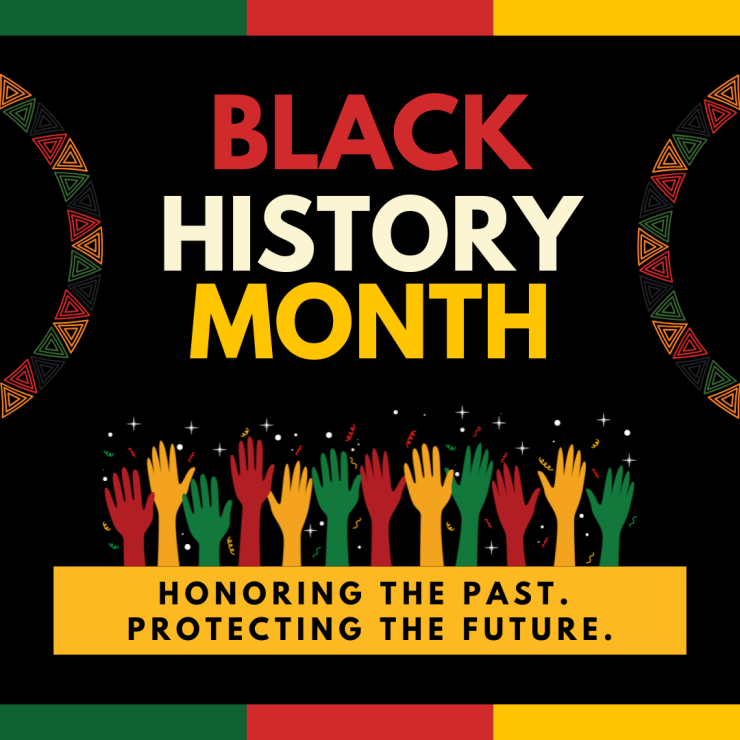
Today, Black History Month continues to matter because representation shapes identity. At STOMP Out Bullying, we believe that honoring history also means safeguarding the emotional, mental, and physical well-being of Black youth — in schools, online, and in everyday life. When young people see themselves reflected in history, culture, leadership, and achievement, it affirms their worth and strengthens their sense of belonging.
Research shows that when students feel connected and valued, rates of bullying decrease, mental health improves, and academic engagement rises. Visibility builds confidence. Inclusion builds resilience. And safety grows where belonging is nurtured.
Belonging is not just emotional — it is protective, representation is not symbolic — it is lifesaving.
Celebrating Black History Month
Each February, National Black History Month serves as both a celebration and a powerful reminder that Black history is American history, Black culture is American culture, and Black stories are essential to our ongoing story — our faults, our struggles, our progress, and our aspirations. The Association for the Study of African American Life and History (ASALH) who works to promote, research, preserve, interpret and disseminate information about Black life, history and culture to the global community. Each year they choose a theme for Black History Month that reflects changes in how people of African descent in the United States have viewed themselves.
Here are some ways you can celebrate black history this month:
- Support a local Black business
- Visit a Black History or Civil Rights Museum in your local area

- Donate to a Black organization
- Spend time with a Black elder in your community
- Read a book by a Black author
- Sign up to mentor a Black child in your community
- Attend or host a Black culture event in your community
- Learn about an unsung hero of Black history
- Explore Black Music
- Sign up to receive news from a Black organization
- Contribute an essay or blog to a Black media outlet
- Support the black media, black press, and the NNPA
- Engage in healthy conversations about Black history on social media
- Read a biography of an influential Black figure
Follow STOMP Out Bullying